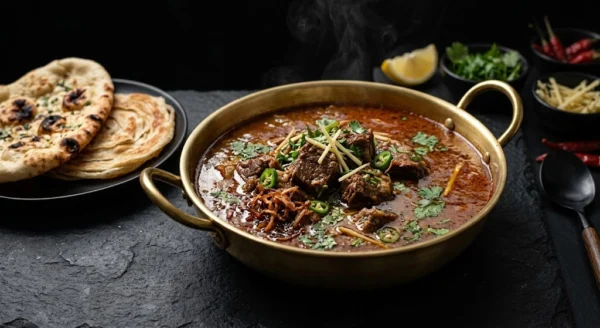
If you have ever tasted a deeply flavorful bowl of Pakistani Nihari, you may have wondered why this famous dish takes so long to prepare. The short answer is simple: Nihari is cooked slowly to tenderize the meat, develop a rich gravy, and allow its spices and savory flavors to come together.
Unlike dishes designed for quick cooking, Nihari benefits from patience. Meat, spices, gravy, and cooking time work together to create the rich taste and tender texture associated with traditional Nihari.
For diners exploring authentic Pakistani food, understanding the cooking process also explains why Nihari tastes so different from many everyday meat curries.
Why Is Nihari Slow-Cooked?
Nihari is slow-cooked because longer, gentle cooking helps tough cuts of meat become tender while giving the gravy time to develop deeper flavor.
During cooking, the meat gradually softens. At the same time, its savory flavors become part of the gravy, while aromatic spices have time to blend throughout the dish.
The result is the combination Nihari lovers look for: tender meat, rich gravy, aromatic spices, and deep savory flavor.
What Happens When Nihari Cooks Slowly?
Slow cooking does more than simply heat the ingredients. Several changes happen throughout the cooking process that affect the final texture and flavor.
1. The Meat Gradually Becomes Tender
Nihari is traditionally suited to cuts of meat that benefit from longer cooking. Gentle heat gives connective tissue time to soften instead of leaving the meat tough.
As a result, properly cooked Nihari should have meat that is tender and easy to eat while still contributing texture to the dish.
2. The Gravy Develops More Flavor
The gravy is one of the most important parts of Nihari. It carries the flavors of the meat, spices, and other ingredients through every bite.
As Nihari cooks, those elements gradually combine. Consequently, the finished gravy can taste more integrated than a sauce in which the ingredients have only cooked together briefly.
3. The Spices Have Time to Blend
Nihari is known for aromatic spices, but a good bowl should not taste like several disconnected seasonings.
Slow cooking gives the spice mixture time to become part of the overall gravy. Instead of one spice dominating every bite, the finished dish can develop a more balanced flavor.
4. Meat and Gravy Develop Flavor Together
One reason slow-cooked Nihari tastes distinctive is that the meat and gravy cook together for an extended period.
The meat contributes savory flavor to the surrounding gravy, while the seasoned liquid continues flavoring the meat. This interaction helps create the characteristic richness associated with Nihari.
Why Does Slow Cooking Make Nihari Meat Tender?
Meat contains connective tissue, including collagen. With sufficient time and gentle heat, collagen can break down into gelatin.
That process contributes to the tender texture of long-cooked meat and can also add body to the surrounding cooking liquid.
This is one reason simply increasing the heat does not necessarily produce the same result faster. High heat can cook the exterior quickly, but tenderness in suitable cuts develops through the combination of temperature and time.
Why Is Nihari Gravy So Rich?
A good Nihari gravy gets its character from more than spices alone.
As the dish cooks, flavors from the meat, cooking liquid, spices, and other recipe components become integrated. Depending on the preparation, the gravy may also be thickened to achieve Nihari’s characteristic consistency.
The goal is a gravy with enough body to accompany tender meat and pair beautifully with fresh naan.
Does Cooking Nihari Longer Always Make It Better?
No. Slow cooking does not mean cooking Nihari indefinitely.
The goal is to give the meat enough time to become tender and allow the gravy to develop without overcooking the ingredients or losing the desired texture.
Therefore, good Nihari depends on controlling both time and heat rather than simply cooking it for as many hours as possible.
Why Can’t Nihari Simply Be Cooked on High Heat?
High heat can speed up some cooking processes, but Nihari depends heavily on gradual tenderization and flavor development.
Cooking too aggressively can reduce liquid quickly or affect the texture before tougher meat has had enough time to soften.
For this reason, patient cooking is an important part of producing the texture people associate with traditional Pakistani Nihari.
What Makes Nihari Different From Regular Beef Curry?
Although Nihari and beef curry can both contain meat, spices, and gravy, they should not automatically be treated as the same dish.
Nihari has its own culinary identity, spice profile, texture, and cooking tradition. Its emphasis on slow-cooked meat and deeply developed gravy is an important part of that identity.
If you are new to the dish, our What Is Nihari? guide explains its taste, ingredients, and Pakistani culinary tradition in greater detail.
Does Nalli Make Nihari Richer?
Nalli Nihari incorporates marrow bone into the Nihari experience. Bone marrow has a rich, savory character, so it can add another dimension to the dish.
However, Nalli does not refer to a particular spice level. Instead, it refers to the marrow-bone component.
For a complete explanation, read our Nalli Nihari vs Regular Nihari guide.
Why Do Ginger and Lemon Taste So Good With Nihari?
Nihari is naturally rich, which is why fresh garnishes can make such a noticeable difference.
Fresh Ginger
Thin strips of ginger provide freshness and a sharp aromatic contrast to the slow-cooked gravy.
Lemon
Fresh lemon adds acidity. That brightness can balance some of the richness in the meat and gravy.
Green Chilies
Green chilies allow diners to add extra heat according to their own preference rather than requiring the entire bowl to be extremely spicy.
Fresh Naan
Naan is ideal for scooping up tender meat and rich gravy, making it one of the classic accompaniments to Nihari.
Is Nihari Supposed to Be Very Spicy?
Not necessarily. Nihari should have deep spice flavor, but spicy does not automatically mean extremely hot.
A well-balanced Nihari can contain several aromatic spices while still allowing the flavor of the meat and gravy to remain noticeable.
Customers who enjoy more heat can add fresh green chilies according to taste.
How Is Nalli Nihari Different From Regular Nihari?
Both versions share the fundamental characteristics of Nihari: tender meat, seasoned gravy, aromatic spices, and slow cooking.
The main difference is marrow bone. Nalli Nihari includes marrow bone, while regular Nihari does not necessarily include it.
Marrow can add another layer of richness and create a different eating experience for diners who enjoy it.
Why Is Nihari So Popular in Pakistani Cuisine?
Nihari has become one of the dishes most closely associated with Pakistani cuisine. Its appeal comes from the combination of comforting warmth, tender meat, aromatic spices, rich gravy, and traditional accompaniments.
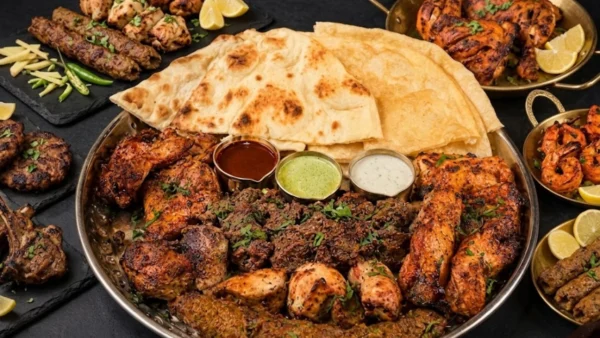
It also works particularly well as a shared meal. Naan, garnishes, kebabs, biryani, and other Pakistani dishes can turn a bowl of Nihari into a larger family-style dining experience.
Those exploring Pakistani cuisine can also read our Pakistani vs Indian Cuisine guide to understand some of the broader similarities and differences between the two culinary traditions.
Where Can You Try Pakistani Nihari Near Chicago?
If you are searching for Pakistani Nihari near Chicago, Shahi Nihari & Chopsticks serves Pakistani Nihari in Villa Park, Illinois.
The restaurant is located at 541 W North Ave, Villa Park, IL 60181 and serves customers from Villa Park and surrounding Chicago suburbs.
Shahi Nihari & Chopsticks uses HFSAA Certified Halal meat, and its menu includes Nihari alongside Pakistani favorites such as biryani, karahi, haleem, kebabs, and BBQ.
You can explore the Shahi Nihari menu for current Nihari options and availability.
Looking for the Best Nihari in Chicago & Villa Park?
Understanding why Nihari is cooked slowly also helps explain what diners should look for in a good bowl: tender meat, flavorful gravy, balanced spices, and richness without losing the character of the dish.
If you are comparing places for Pakistani Nihari in Chicago, read our Best Nihari in Chicago & Villa Park guide.
It explains what makes great Pakistani Nihari and covers regular Nihari, Nalli Nihari, traditional pairings, and what first-time diners should know.
Frequently Asked Questions About Slow-Cooked Nihari
Why does Nihari take so long to cook?
Nihari benefits from slow cooking because time and gentle heat help tenderize suitable cuts of meat while allowing the meat, spices, and gravy to develop flavor together.
Why is Nihari cooked slowly?
Nihari is cooked slowly to develop tender meat and a rich, integrated gravy. Longer cooking also gives aromatic spices time to blend with the savory flavors of the meat.
Does Nihari taste better the longer it cooks?
Nihari needs sufficient cooking time, but longer is not always better. The goal is to cook it until the meat reaches the desired tenderness and the gravy develops properly without overcooking the dish.
What makes Nihari meat so tender?
Slow cooking gives connective tissue in suitable meat cuts time to soften. Collagen can gradually convert into gelatin, contributing to tenderness and body in the cooking liquid.
Why is Nihari gravy thick?
Nihari gravy develops body through the cooking process and may also be thickened depending on the recipe. The finished consistency should complement the tender meat and work well with naan.
Is Nihari cooked overnight?
Some traditional and restaurant preparations use very long cooking times, including overnight cooking. However, exact methods and cooking times vary between recipes and kitchens.
Is Nihari the same as beef curry?
No. Although both can contain meat, spices, and gravy, Nihari has its own spice profile, texture, cooking tradition, and culinary identity.
What is the secret to good Nihari?
There is no single secret ingredient. Good Nihari depends on the combination of suitable meat, balanced spices, controlled heat, sufficient cooking time, flavorful gravy, and proper texture.
Does Nalli Nihari take longer to cook?
Cooking time depends on the recipe, meat cut, bone size, quantity, and cooking method. Nalli refers to the marrow-bone component rather than a specific cooking time.
Where can I find halal Nihari near Chicago?
Shahi Nihari & Chopsticks serves Pakistani Nihari in Villa Park, Illinois, and uses HFSAA Certified Halal meat. Check the current Nihari menu before visiting for available options.
The Secret Behind Nihari’s Flavor Is Patience
So, why is Nihari cooked so slowly? Because time is an important part of what gives the dish its characteristic texture and depth.
Slow cooking helps suitable cuts of meat become tender. Meanwhile, the meat contributes savory flavor to the gravy, the spices become integrated, and the different elements of the dish come together.
That combination helps transform relatively simple ingredients into the rich and comforting dish known as Pakistani Nihari.
If you want to experience it for yourself, explore the Nihari menu at Shahi Nihari & Chopsticks or browse the full Pakistani food menu for more dishes.